
Respiratory health
Allergic Rhinitis in Children & Adults
When a “simple allergy” keeps coming back, there may be more to understand.
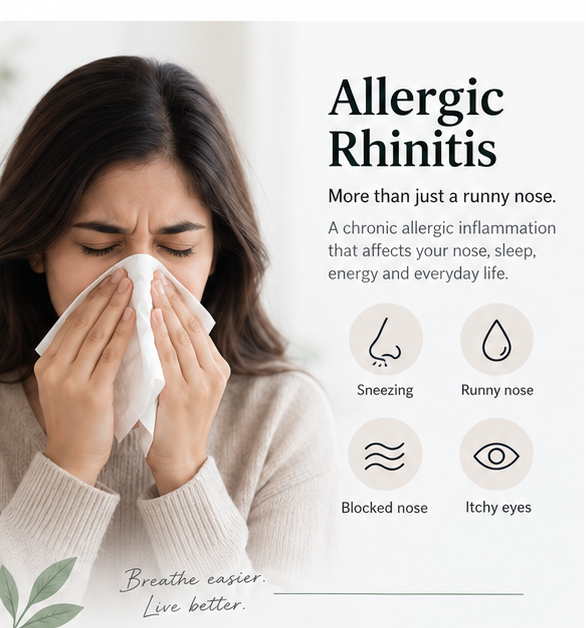
Sneezing, a blocked or runny nose, itching, watery eyes, mouth breathing and disturbed sleep can become part of everyday life. Persistent symptoms deserve a complete assessment.
Book a consultation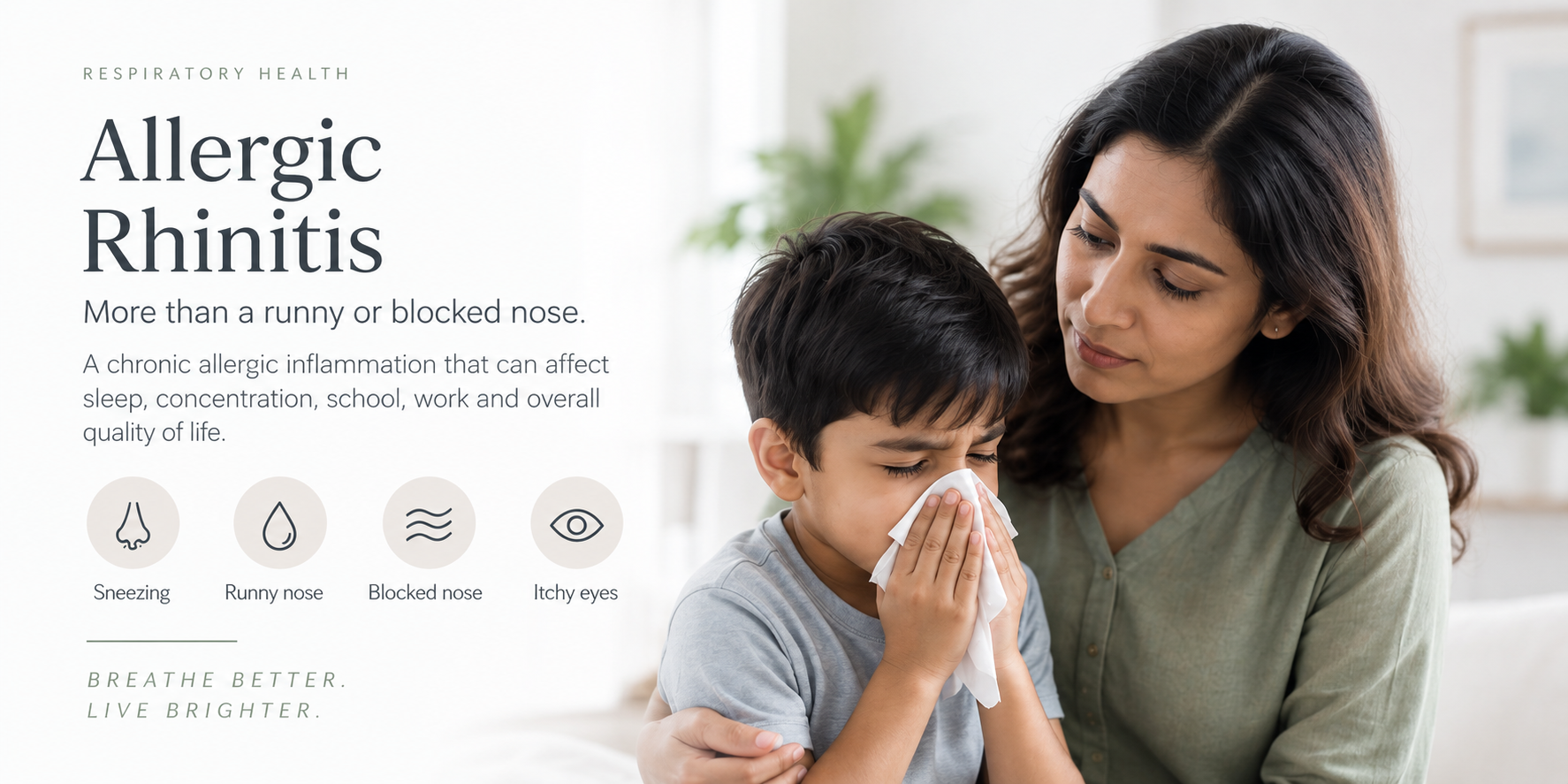
Understanding the condition
What is allergic rhinitis?
Allergic rhinitis is inflammation of the nasal lining that occurs when a sensitised person’s immune system reacts to otherwise harmless airborne substances such as house-dust-mite allergens, pollen, mould or animal dander.
It can be intermittent or persistent, and its pattern can vary considerably between children and adults. The problem is not simply “too much mucus”; an allergic inflammatory response is taking place in the nasal mucosa.
- Repeated sneezing
- Itching inside the nose
- Clear runny nose
- Nasal blockage or congestion
- Post-nasal drip or throat clearing
- Reduced sense of smell
- Watery or itchy eyes
- Coughing in some patients
Inside the nose
Why the reaction keeps returning
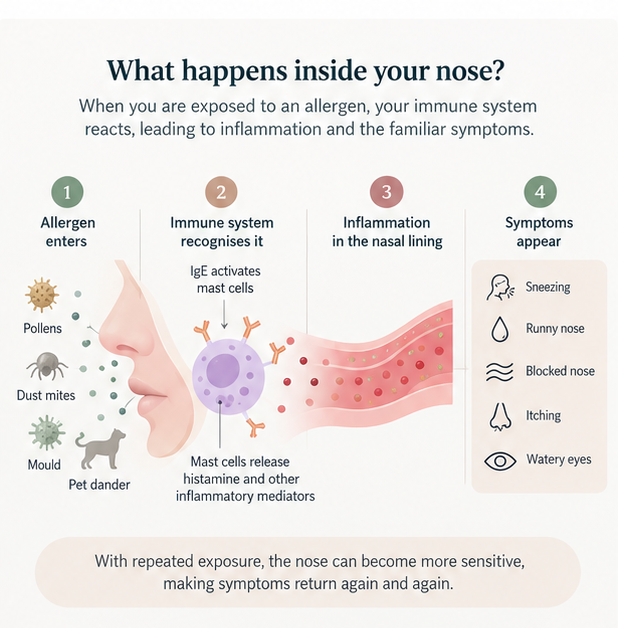
When an allergen meets allergen-specific IgE on mast cells, those cells release histamine and other inflammatory mediators. This produces the familiar early sequence: sneezing, itching, watery discharge and congestion.
Over the following hours, additional inflammatory cells—including eosinophils and T cells—can enter the nasal tissue. This later phase contributes to persistent congestion and ongoing sensitivity.
With repeated exposure, some people begin reacting not only to a known allergen but also to dust, perfume, air conditioning, pollution or weather changes.
Causes and context
Why do some people develop it?
There is rarely one explanation. Allergic disease develops through an interaction between genetic susceptibility, immune responses and environmental exposure.
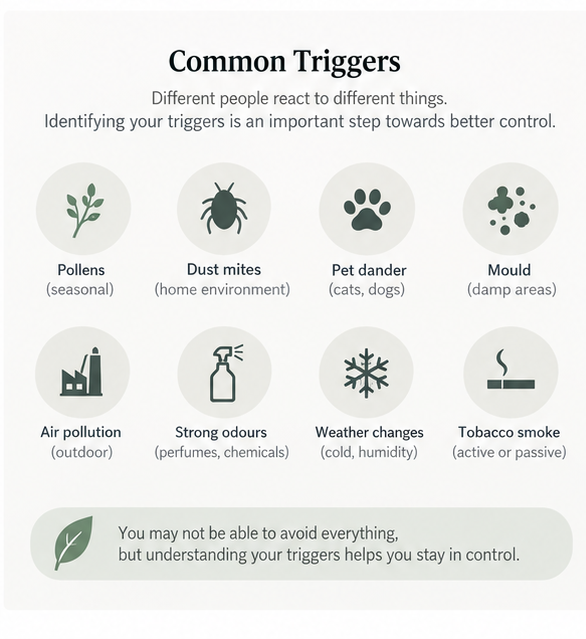
This is why simply saying “you are allergic to dust” may not explain the entire story. Irritants can aggravate symptoms even when they are not the underlying allergen.
Allergic rhinitis in children
Repeated “colds” can sometimes be allergy. Poorly controlled symptoms may affect sleep, quality of life and school functioning, and may coexist with asthma.
- Morning sneezing and recurrent clear discharge
- Nose rubbing or the habitual ‘allergic salute’
- Mouth breathing, snoring or restless sleep
- Itchy eyes, post-nasal drip or recurrent cough
- Difficulty concentrating, daytime tiredness or irritability
Persistent obstruction can also come from enlarged adenoids, infection, structural problems or non-allergic rhinitis, so the diagnosis matters.
Allergic rhinitis in adults
Adults often adapt so gradually that waking congested, carrying tissues, avoiding environments or relying on symptom-relief medicines starts to feel normal.
Symptoms may interfere with work, exercise, travel, sleep, concentration and social life. Allergic rhinitis is not merely a cosmetic nuisance; persistent disease can significantly affect day-to-day quality of life.
A careful history helps separate allergy from other causes and shows which treatments and investigations are appropriate.
Treatment choices
Why does it keep coming back?
Antihistamines can reduce symptoms. Intranasal corticosteroids reduce nasal inflammation. Saline irrigation can provide additional relief. Current allergy guidance places intranasal corticosteroids among the principal treatments, with steroid–antihistamine nasal combinations another option when symptoms remain uncontrolled.
For selected patients with confirmed relevant allergies, allergen immunotherapy may offer disease-modifying benefits that persist beyond treatment.
The better question
Not “Does modern medicine only suppress allergy?” but “Which part of this person’s allergic disease are we trying to control, and which longer-term options are appropriate?”
Medicines are not inherently “bad” or addictive. Some people genuinely need ongoing or recurrent evidence-based treatment.
At Caitanya Healing
An individual pattern, not a standard protocol
Two people may both have sneezing, blockage and watery discharge, yet differ completely in timing, environment, sleep, associated disease and treatment history. Our first step is to understand that individual picture.
Long-term framework
Our four-phase approach
Chronic diseases are biological systems, not school timetables. Every patient does not follow the same schedule, but care generally moves through four broad stages.
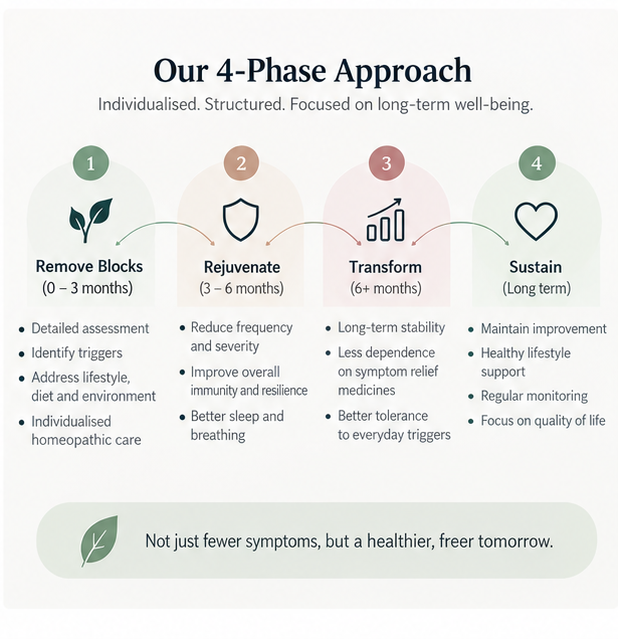
- 1
Understand and remove maintaining factors
Usually the first 2–3 months: review previous treatment, identify relevant exposures, improve sleep and practical habits, support nasal hygiene and select an individualised plan.
- 2
Rejuvenate and stabilise
Approximately 3–6 months: track episode frequency, severity, sleep, obstruction, school or work disruption and rescue-treatment use.
- 3
Transform the disease pattern
For selected patients: work towards fewer, less severe episodes, better sleep and improved tolerance of everyday environments.
- 4
Sustain improvement
Maintain gains through appropriate care, environmental measures, healthy routines and regular monitoring.
Clinical assessment
What investigations may help?
Not everyone needs extensive testing. Diagnosis is often based on history and examination. Testing is most useful when its result will answer an important question or change management.
- Clinical history and examination
- Skin-prick testing when identifying an allergen will change care
- Serum-specific IgE testing in selected patients
- Assessment for asthma, sinus disease or nasal polyps when indicated
- Adenoid, ear or structural nasal evaluation in children when appropriate
Everyday support
What can you do at home?
There is no single “anti-allergy diet” that cures allergic rhinitis, but practical measures can help when they address a relevant trigger.
- Reduce relevant exposure
- Use practical measures for dust mites, pollen, mould or pets when there is a clear relationship to symptoms.
- Consider nasal saline irrigation
- Evidence suggests saline irrigation can help children and adults as an addition to standard treatment.
- Avoid tobacco smoke
- Smoke and other irritants can worsen respiratory and nasal symptoms.
- Protect sleep
- Pay particular attention when a child has congestion, snoring or mouth breathing.
- Track the pattern
- A simple diary may reveal links with season, location, exposure or activity.
When to seek further evaluation
Do not assume every recurring nasal problem is “just allergy.” Medical assessment is particularly important with:
- Persistent severe or one-sided nasal obstruction
- Recurrent nosebleeds, facial pain or swelling
- A persistent reduction in smell or repeated sinus infections
- Ongoing cough, wheezing or breathing difficulty
- Significant snoring or sleep disturbance in a child
- Poor growth, unexplained weight loss or recurrent ear problems
- Symptoms that do not fit a typical allergic pattern
Honest expectations
Can allergic rhinitis improve long term?
It can, but improvement should be defined properly: fewer daily symptoms, better sleep, less obstruction, fewer interruptions to school or work, or less frequent need for symptom-relief medication under medical supervision.
Our role is to understand the case, establish realistic goals, and monitor whether the patient is actually improving—not to promise that every person will become completely symptom-free.
Common questions
Allergic rhinitis FAQs
- Is allergic rhinitis the same as sinusitis?
- No. Allergic rhinitis affects the nasal lining, while sinusitis involves inflammation or infection of the paranasal sinuses. They can coexist, so persistent or atypical symptoms deserve assessment.
- Can allergic rhinitis turn into asthma?
- Allergic rhinitis and asthma commonly coexist and share allergic inflammatory mechanisms. Anyone with rhinitis plus wheezing, cough or breathing difficulty should be assessed for asthma.
- Does every child with recurrent cold have allergic rhinitis?
- No. Viral infections, enlarged adenoids, non-allergic rhinitis, sinus disease and other conditions can cause similar symptoms in children.
- Do antihistamines cure allergic rhinitis?
- Antihistamines mainly control allergic symptoms. Intranasal corticosteroids are also important for persistent symptoms because they reduce nasal inflammation.
- Is there a permanent cure for allergic rhinitis?
- No treatment guarantees permanent elimination for every patient. Allergen immunotherapy can have longer-lasting, disease-modifying effects in appropriately selected patients; other treatments mainly control inflammation and symptoms.
- Why does my child breathe through the mouth?
- Nasal obstruction can lead to mouth breathing, but allergy is not the only cause. Enlarged adenoids, structural obstruction and other nasal conditions may also contribute.
- Can homeopathy help allergic rhinitis?
- Homeopathic care at Caitanya Healing is individualised after reviewing the symptom pattern, triggers, sleep, environment and broader health history. The aim is to reduce the frequency and intensity of symptoms and improve day-to-day comfort. Response varies, so progress is reviewed regularly, and prescribed medicines should not be stopped without the treating doctor's guidance.
When you meet us
Leave with more than a diagnosis.
Understand what may be happening, what should be investigated, what can realistically change, how progress will be measured, and what the next few months may look like.
Consult with Dr. Shailesh Yadav
Educational information only. It is not a substitute for diagnosis or emergency medical care. Do not stop prescribed medicines, inhalers or other treatments without discussing this with your treating doctor.